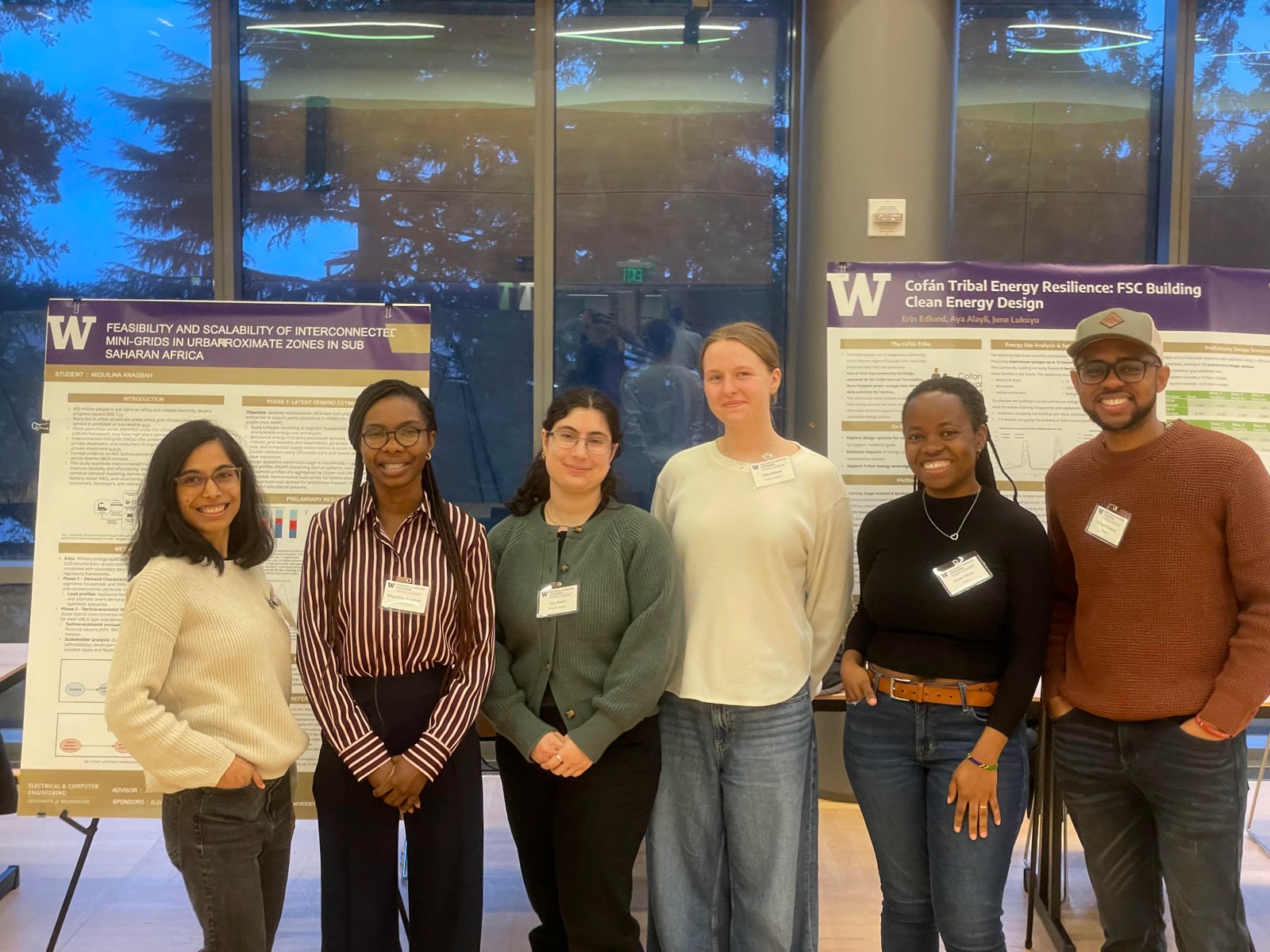
Miquilina's passion for clean energy access and mini-grid development is electrifying! With a strong foundation in power systems analysis, design, and operations, Miquilina aims to revolutionize how we think about electrification for sustainable development. She earned her Master's in Electrical and Computer Engineering from Carnegie Mellon University Africa. Her research dives deep into mini-grid techno-economic analyses and grid integration studies and looks for new ways to push the boundaries of what's possible. Outside the lab, she loves studying new languages and playing the piano.
University of Washington Electrical & Computer Engineering
Learning · Research · Impact
PhD timeline
Scroll through the milestones, or jump to a year. Scheduled activities are marked below.
2024
Summer 2024
Joining IDEAS Lab and Research Foundations
Joined the University of Washington and the IDEAS Lab, beginning research focused on sustainable energy systems and transportation.
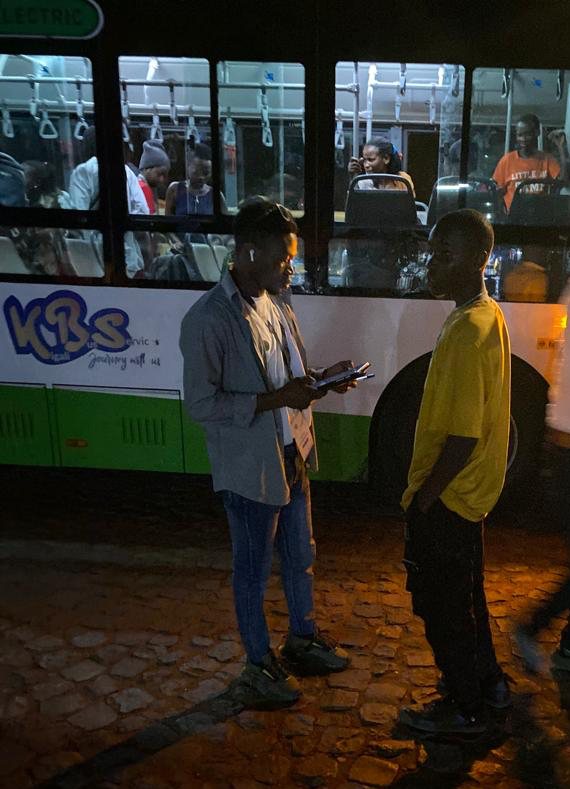
Multi-Stakeholder Perspectives of Electric Bus Service: Led field data collection in Kigali, Rwanda, in collaboration with students from the University of Rwanda’s College of Science and Technology.
Clean Energy Institute Undergraduate Mentor: Co-mentored two undergraduate summer researchers investigating electricity consumption patterns, payment behaviors, and demographic factors influencing access to clean energy among rural customers in Uganda. The projects combined real-world data analysis with research on energy access and equity.
Conducted data analysis for a comparative study of rider and operator satisfaction with diesel and electric bus services in Kigali, Rwanda, examining perspectives on the transition to electric public transportation.
Continued research on A Comparative Analysis of Diesel and Electric Bus Rider and Operator Satisfaction in Kigali, building on field data collection and subsequent analysis to better understand stakeholder experiences with conventional and electric bus services.
Galloway Fellowship: Received fellowship support made possible by Debbie and Dave Galloway in collaboration with the University of Washington’s Department of Electrical and Computer Engineering. The fellowship supports innovation in renewable energy and power systems.
Continued research on Interconnected Mini-Grids in Closing the Energy Access and Reliability Gap.
Galloway Fellowship support period: October 2025–March 2026.
Internship at GE Vernova: Gained industry experience at the intersection of energy technology, engineering, and power systems, complementing academic research with practical industry exposure.
Autumn 2026
Expanding Research Horizons
Finalizing research on The Role of Interconnected Mini-Grids in Closing the Reliability Gap.
Began work on Mapping the Viability Frontier for Interconnected Mini-Grids Under Macroeconomic Uncertainty, examining how economic uncertainty influences the feasibility and potential deployment of interconnected mini-grid systems.
Joined the PATIO Energy and Sustainability Score for Edge Computing, expanding research interests to include energy efficiency and sustainability in emerging computing infrastructure.
Field data collection and analysis of rider and operator experiences with electric and diesel bus services in Kigali, from Summer 2024 through Summer 2025.
Research on interconnected mini-grids and electricity reliability in peri-urban Africa, begun in Summer 2025 and being finalized in Autumn 2026.
Mapping the Viability Frontier for Interconnected Mini-Grids Under Macroeconomic Uncertainty
Begun in Autumn 2026, this research examines how economic uncertainty influences the feasibility and potential deployment of interconnected mini-grid systems.
PATIO Energy and Sustainability Score for Edge Computing
Joined in Autumn 2026, expanding research into energy efficiency and sustainability in emerging computing infrastructure.
Sharing the work
Outputs
Publications, presentations, and other outputs will be added here.